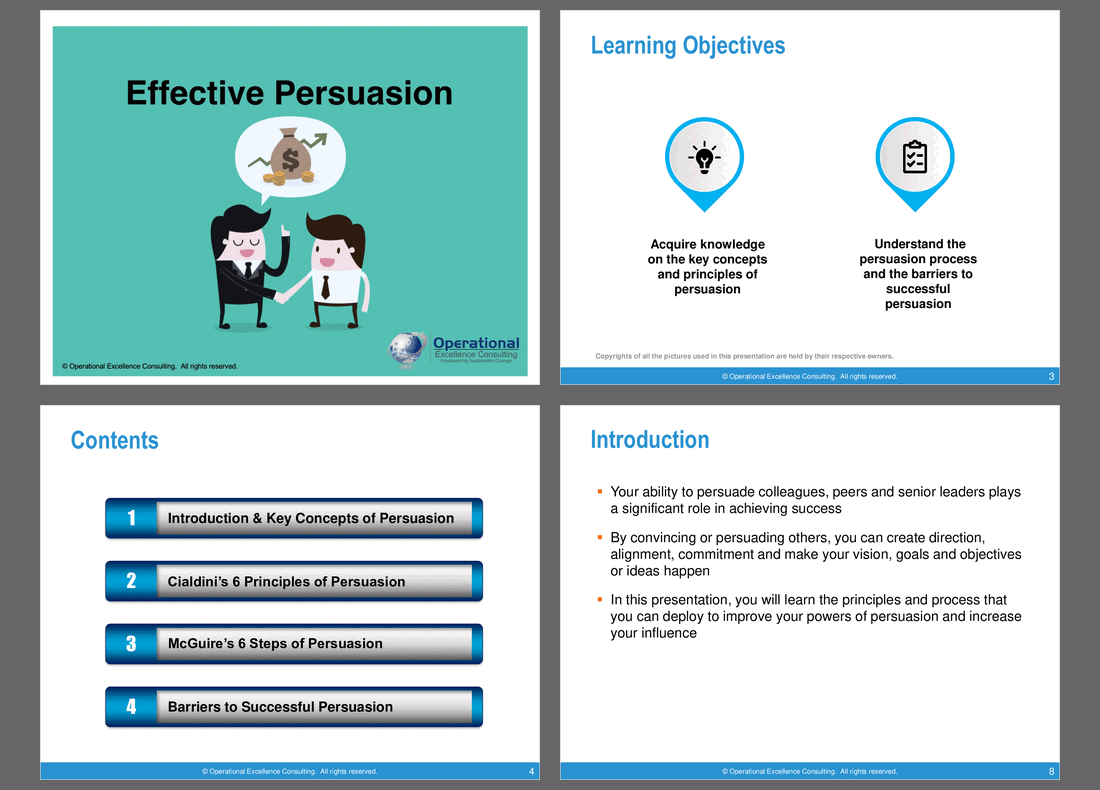

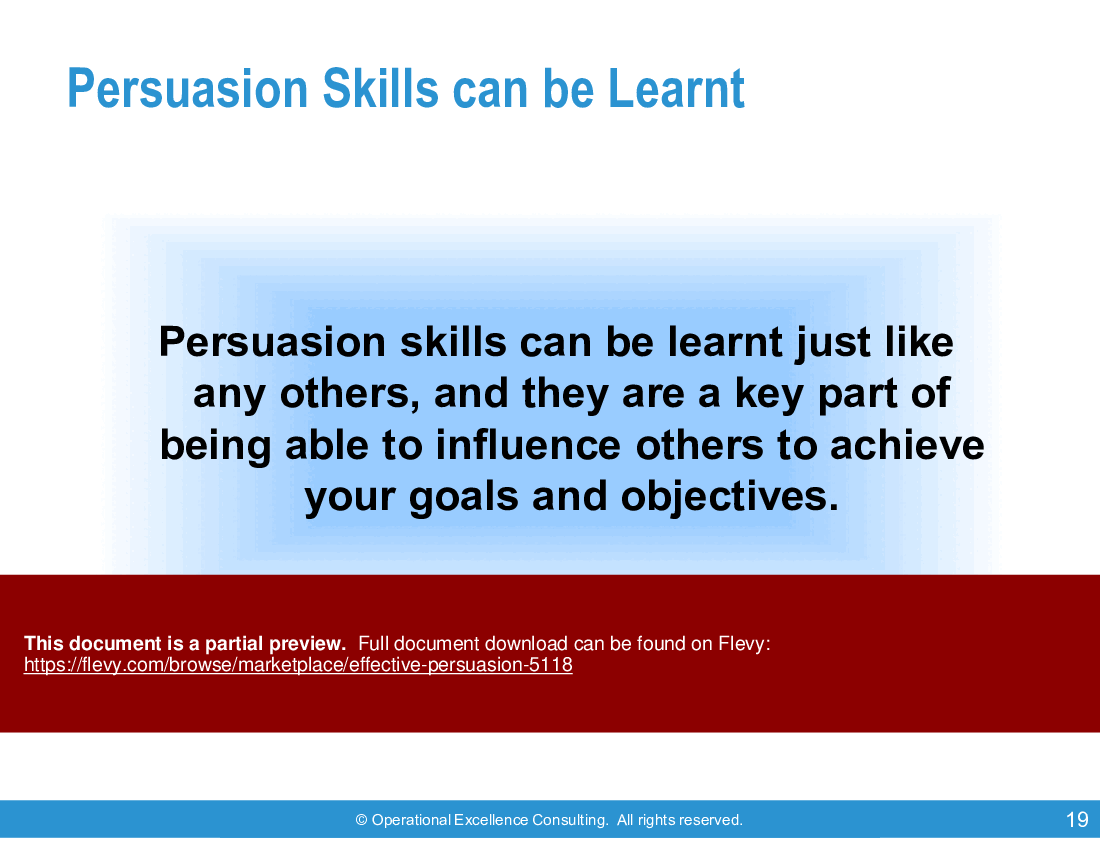

Your ability to persuade colleagues, peers, and senior leaders plays a significant role in achieving success. By convincing or persuading others, you can create direction, alignment, commitment, and make your vision, goals, objectives, or ideas a reality.
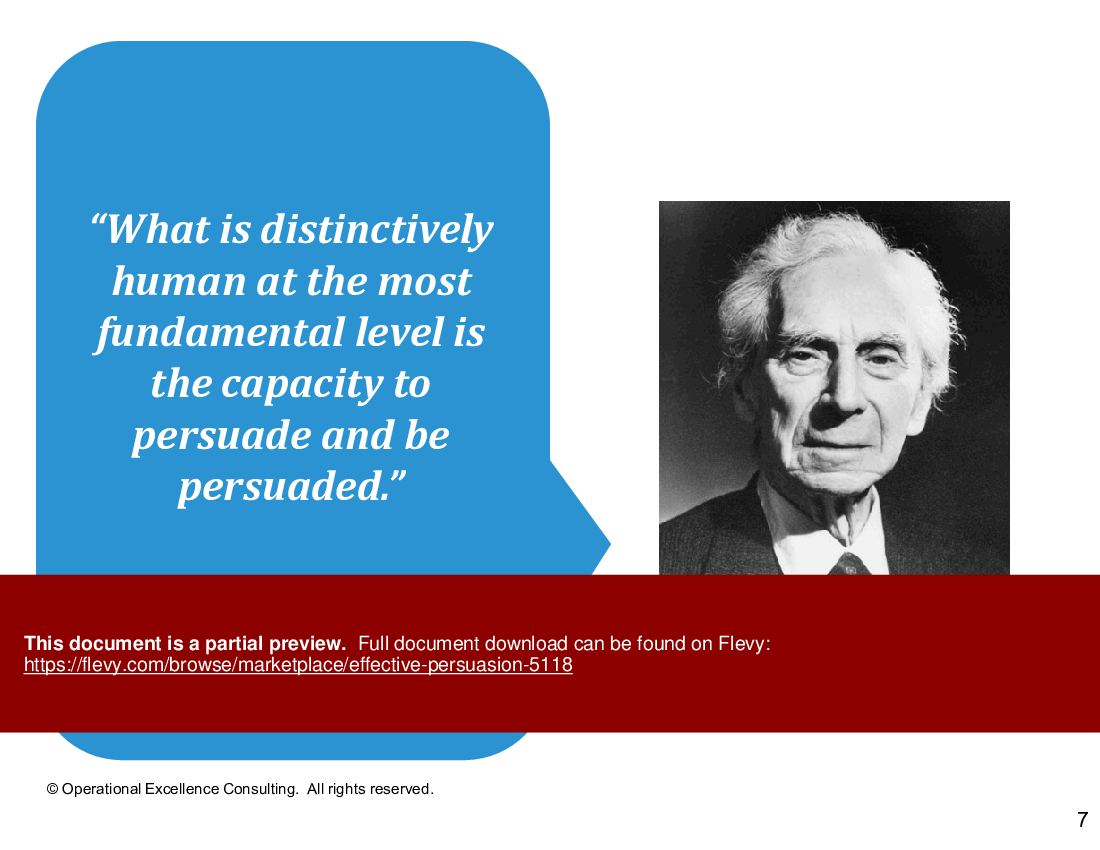
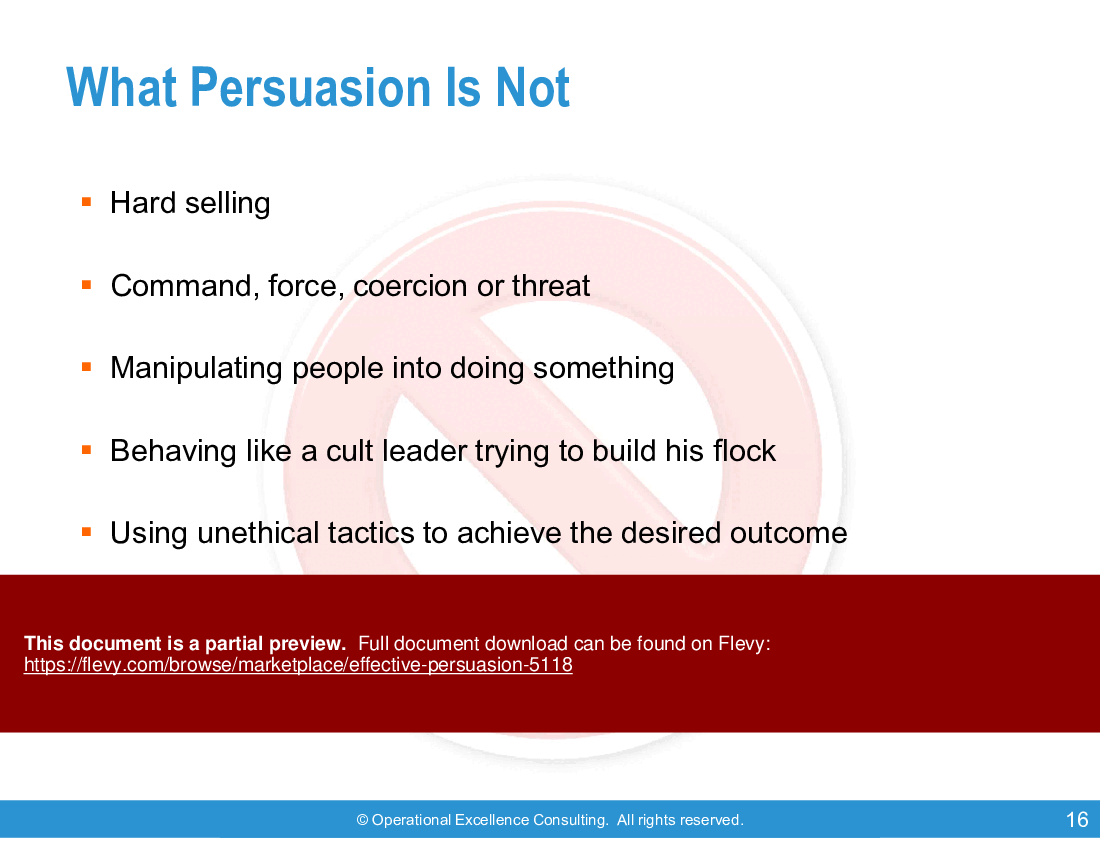
Effective persuasion is the ability to make someone do or believe something by giving them a good reason to do it or by talking to that person and making them believe it. It's important to note that persuasion is not the same as manipulation; it involves presenting valid reasons and fostering genuine understanding.
During the Covid-19 pandemic, persuasion skills are critical for government officials who are required to convince people of the need for lockdowns, practice safe management measures (e.g., wearing masks), and getting vaccinated.
In this presentation, you will learn the principles and processes developed by world-renowned psychologists such as Robert Cialdini and William J. McGuire that you can deploy to improve your powers of persuasion and increase your influence. This presentation can be seamlessly integrated as a module into your soft skills training program, including Leadership and Communication skills.
LEARNING OBJECTIVES
1. Acquire knowledge on the key concepts and principles of persuasion.
2. Understand the persuasion process and the barriers to successful persuasion.
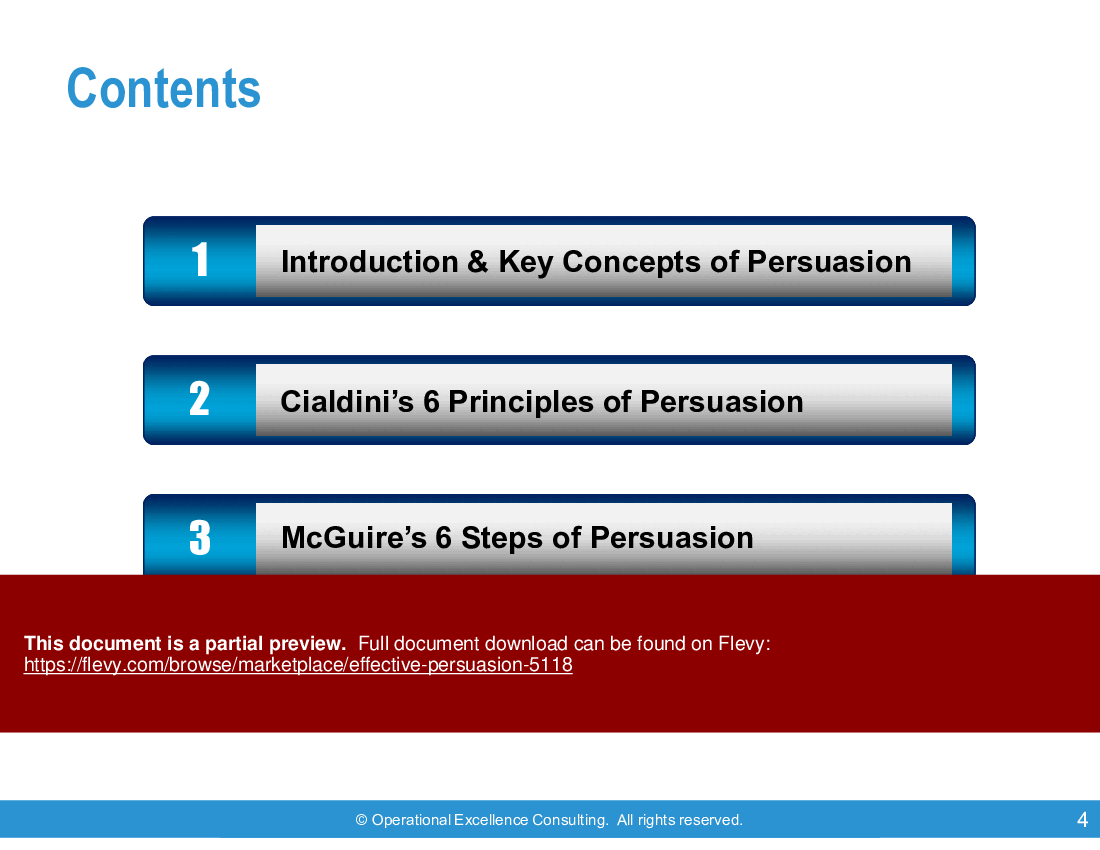
CONTENTS
1. Introduction & Key Concepts of Persuasion
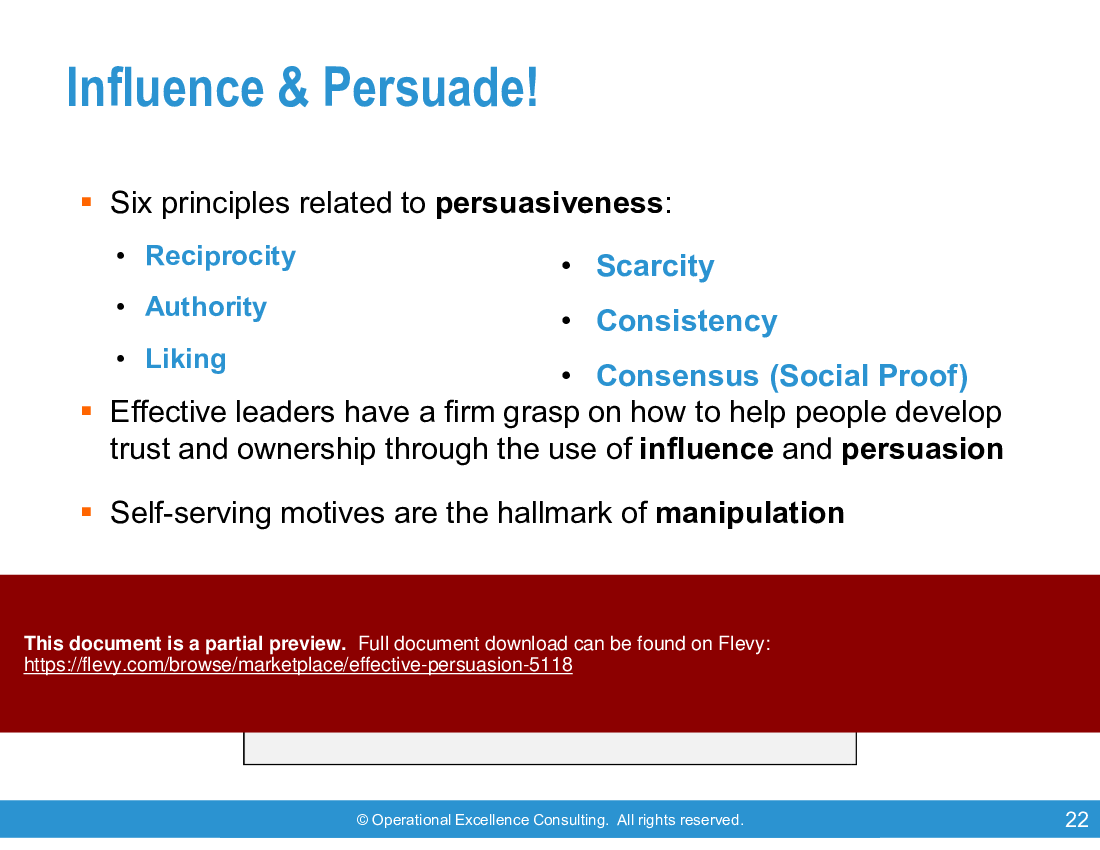
2. Cialdini's 6 Principles of Persuasion
• Reciprocity
• Scarcity
• Authority
• Commitment & Consistency
• Liking
• Consensus (Social Proof)
3. McGuire's 6 Steps of Persuasion
• Presentation
• Attention
• Comprehension
• Yielding
• Retention
• Behavior
4. Barriers to Successful Persuasion
Got a question about the product? Email us at support@flevy.com or ask the author directly by using the "Ask the Author a Question" form. If you cannot view the preview above this document description, go here to view the large preview instead.
Executive Summary
The "Effective Persuasion" presentation is designed to equip professionals with essential strategies and techniques for mastering the art of persuasion. Developed by Operational Excellence Consulting, this training resource provides insights into the principles of persuasion, barriers to effective communication, and actionable steps to influence others positively. By utilizing this presentation, corporate executives, integration leaders, and consultants can enhance their persuasive abilities, foster alignment, and drive impactful results within their organizations.
Who This Is For and When to Use
• Corporate executives seeking to improve their influence and leadership effectiveness
• Integration leaders managing change initiatives and stakeholder engagement
• Consultants aiming to enhance client communication and persuasion strategies
• Sales and marketing professionals looking to refine their persuasive techniques
Best-fit moments to use this deck:
• During leadership training sessions focused on communication skills
• In workshops aimed at improving team collaboration and alignment
• When preparing for client presentations or negotiations
Learning Objectives
• Acquire knowledge on the key concepts and principles of persuasion
• Understand the persuasion process and barriers to successful persuasion
• Apply Cialdini’s 6 principles of persuasion in real-world scenarios
• Implement McGuire’s 6 steps of persuasion to enhance communication effectiveness
• Identify and overcome common barriers to successful persuasion
• Develop actionable strategies to influence stakeholders positively
Table of Contents
• Introduction & Key Concepts of Persuasion (page 5)
• Cialdini’s 6 Principles of Persuasion (page 35)
• McGuire’s 6 Steps of Persuasion (page 65)
• Barriers to Successful Persuasion (page 77)
Primary Topics Covered
• Key Concepts of Persuasion - Understanding the fundamental principles that underpin effective persuasion, including the importance of emotional and logical appeals.
• Cialdini’s Principles - An exploration of the 6 principles of persuasion: reciprocity, authority, liking, consistency, scarcity, and consensus (social proof).
• McGuire’s Persuasion Steps - A structured approach to persuasion that includes presentation, attention, comprehension, yielding, retention, and behavior.

• Barriers to Persuasion - Identification of common obstacles that hinder effective persuasion and strategies to overcome them.
Deliverables, Templates, and Tools
• Persuasion process templates for structured communication
• Checklists for applying Cialdini’s principles in various contexts
• Worksheets for practicing McGuire’s 6 steps of persuasion
• Guides for identifying and addressing barriers to persuasion
Slide Highlights
• Overview of Cialdini’s 6 principles of persuasion with practical examples
• Step-by-step breakdown of McGuire’s 6 steps of persuasion
• Visual representations of barriers to successful persuasion and strategies to overcome them
• Engaging activities designed to reinforce learning and application of concepts
Potential Workshop Agenda
Introduction to Persuasion (30 minutes)
• Discuss key concepts and importance of persuasion
• Engage in group activity to identify effective communicators
Cialdini’s Principles of Persuasion (45 minutes)
• Review each principle with examples
• Group discussion on application in real scenarios
McGuire’s Steps of Persuasion (45 minutes)
• Detailed exploration of each step
• Role-play exercises to practice persuasion techniques
Barriers to Successful Persuasion (30 minutes)
• Identify common barriers
• Develop strategies to overcome these challenges
Customization Guidance
• Tailor examples and case studies to reflect your industry or organizational context
• Adjust activities to align with the specific needs of your audience
• Incorporate organizational terminology and metrics to enhance relevance
Secondary Topics Covered
• The role of emotional intelligence in persuasion
• Ethical considerations in persuasive communication
• The impact of cultural differences on persuasion strategies
• Techniques for building trust and rapport with stakeholdersDocument FAQ
These are questions addressed within this presentation.
What are the key principles of persuasion?
Cialdini’s 6 principles include reciprocity, authority, liking, consistency, scarcity, and consensus, each providing a framework for influencing others effectively.
How can I apply McGuire’s steps of persuasion?
Utilize the 6 steps—presentation, attention, comprehension, yielding, retention, and behavior—to structure your persuasive messages and enhance their effectiveness.
What barriers might I face in persuasion?
Common barriers include over-communication, lack of preparation, and assumptions about the audience. Identifying these barriers is crucial for effective persuasion.
How can I improve my persuasive skills?
Practice applying the principles and steps outlined in this presentation, seek feedback, and continuously refine your approach based on audience responses.
Is this presentation customizable?
Yes, the presentation can be tailored to meet the specific needs of your organization and audience, including the incorporation of relevant examples and terminology.
Glossary
• Persuasion - The process aimed at convincing someone to believe or do something.
• Reciprocity - The principle that people feel obligated to return favors.
• Authority - The influence exerted by credible and knowledgeable sources.
• Liking - The tendency to comply with requests from people we like.
• Consistency - The commitment to act in ways that align with previous decisions.
• Consensus (Social Proof) - The influence of the actions of others on individual behavior.
• Emotional Intelligence - The ability to understand and manage emotions in oneself and others.

• Ethical Persuasion - The practice of influencing others in a manner that is respectful and honest.
• Stakeholder Analysis - The process of identifying and understanding the interests of stakeholders.
• Influence - The capacity to have an effect on the character or behavior of someone.
• Communication Goals - Objectives aimed at conveying information, persuading, or ensuring understanding.
• Engagement - The process of involving stakeholders in a meaningful way.
• Active Listening - The practice of fully concentrating, understanding, and responding to a speaker.
• Feedback - Information provided about reactions to a product, service, or performance.
• Trust - The reliance on the integrity, strength, or ability of a person or process.
• Barriers to Persuasion - Obstacles that hinder effective communication and influence.
• Cialdini’s Principles - A set of 6 principles that outline effective persuasion techniques.
• McGuire’s Steps - A six-step model for structuring persuasive communication.
• Behavior Change - The process of altering an individual's actions or habits.
• Presentation Skills - The ability to effectively communicate information to an audience.
Source: Best Practices in Communications Strategy PowerPoint Slides: Effective Persuasion PowerPoint (PPTX) Presentation Slide Deck, Operational Excellence Consulting
This document is available as part of the following discounted bundle(s):
Save %!
Persuasive Communication Skills
This bundle contains 2 total documents. See all the documents to the right.
|
Download our FREE Organization, Change, & Culture, Templates
Download our free compilation of 50+ slides and templates on Organizational Design, Change Management, and Corporate Culture. Methodologies include ADKAR, Burke-Litwin Change Model, McKinsey 7-S, Competing Values Framework, etc. |